Hey there, fellow seekers of that elusive spark for new habits! If you’re diving into ideas and inspiration for shaking up your life, I’ve been diving deep into neuroscience and discipline lately.
Understanding how our brains actually work turns change from a personal battle into a smart, repeatable system. Habits aren’t exact proof of our character strengths or weaknesses, they’re simply repeating neural patterns wired deep inside us.
Motivation is a biological wave that rises and falls. Procrastination does not mean we are lazy, it is our brain’s intelligent way of shielding us from discomfort. Once you really grasp that truth, you stop waiting for the perfect mood or the perfect moment.
You start designing the conditions that make starting easy. You reduce friction, increase clarity, repeat the small actions consistently, and let your brain rewire itself around them. That’s when resistance starts to crumble and habits finally stick for a smoother, lighter life.
Inspired by Andrew Huberman, James Clear, and Steven Pressfield, I put this piece together to walk you through the real process of building fresh habits. It’s the same mindset I use with training and nutrition.
We’re not chasing quick fixes; we’re creating lifestyle shifts where routines become natural, each one quietly supporting the next until they form your own personal symphony of awesomeness.
Don’t be fooled by the “effortless living” headline. Nothing truly valuable arrives without effort. But here’s the beautiful paradox I’ve found: the more deliberately we make certain parts of our days harder on purpose, the lighter and freer the rest of life becomes.
Let’s look at how to recognise and defeat that inner resistance. We want to build an identity that actually supports the person e want to become.
Decoding resistance: why we freeze before the first step
Anyone who has ever tried to add a solid new habit knows exactly what that invisible pull feels like. The force that holds you back right before the first step. Pressfield calls it Resistance, and it shows up loudest precisely when you’re trying to do something genuinely good for yourself. Morning routines, consistent workouts, meditation, deep work.
What surprised me most is that it’s not about us being lazy. It’s an inner personality conflict trying to protect the old version of us from change. Huberman gives the neurological explanation: it’s friction in the brain, that wave of fatigue, hesitation, or low-level fear designed to keep you from starting.
Resistance isn’t the enemy. It’s a signal. Very often it points exactly to the place where the biggest growth is waiting. The stronger the resistance, the more certain you can be that you’re stepping outside of your comfort zone, and that’s precisely where real new habits are born.
Building identity instead of focusing on end goals
We shouldn’t build our lives around goals. We are building them around our identity. Identity is the direction, goals are just the destination. When we focus on who we are becoming rather than what we want to achieve, every single action becomes a vote for our future self.
It stops being “I have to train today.” It becomes “I’m becoming the kind of person who trains.” It’s no longer “I need to be more disciplined.” It becomes “I’m building the identity of someone who lives with discipline.”
When we combine brain science, a healthy relationship with resistance, and deliberate identity work, change stops feeling like a fight against ourselves. It turns into alignment with the person we actually want to be.
At that point habits aren’t forced anymore. They’re quiet confirmations of our new identity. Each small proof stacks up and slowly rewires our self-image until our behavior naturally lines up with who we now believe we are.
- Spotting resistance? Tune into excuses like “It’s raining today, I’ll just start tomorrow” or “I didn’t sleep well, better not push it today.” Those are almost always masks for a deeper fear.
- First wins: Treat each habit like a small, exciting challenge and break it into the tiniest possible first steps so you can collect constant little wins that keep the momentum alive.
Cortisol is not bad!
One habit I added recently is going for a run, or at least a short walk when the sun rises. Getting that natural cortisol spike from morning light, plus movement has been one of the best productivity resets I’ve ever found.
The night before, I always set my gear out so there’s almost zero friction when I wake up. On heavy or tired days I promise myself only 2k. Most of the time, once I’m out the door and moving, those 2 kilometres quietly turn into 4 or even 7.
The hardest part is always just crossing the threshold and taking the first few steps in the cold air. After that, momentum almost always carries you further.
This connects straight back to what I’ve written before about injuries being tough but honest teachers. In training, just like in life, we often have to move through the initial discomfort before the flow state opens up.
That’s why functional training is the best way to work out. It prepares the body (and mind) for real demands. The same principle applies to building habits.
Turning resistance into alignment: identity + small actions
Why do so many new habits fade after a few weeks? Usually because we never made them obvious or easy enough. Clear puts it perfectly: the environment shapes behavior far more powerfully than willpower ever will.
Mornings are the sweet spot for stacking new habits because that’s when your willpower and energy are highest. Do the hardest thing first, and the rest of the day tends to glide. In the evening, before sleep it is a great idea to do a quick mental rehearsal of the whole habit sequence.
For the morning run I picture putting on the shoes, stepping outside, warming up, running the route, and finishing with that satisfied stretch.
Pressfield would say we’re inviting our muse, that higher creative or disciplined energy that shows up when we consistently show up first.
Environment hacks
Keep the water bottle, the book, or the running shoes in plain sight. The reverse works for breaking bad habits: get the tempting snacks completely out of view. Or better yet, never buy them in the first place.
Visualisation in action
Close your eyes and mentally walk through every step of the habit you’re building. Research shows our brain activates almost the same neural pathways during vivid visualisation as it does during the real action. We’re literally training procedural memory. The memory of how to do the thing, not just wishing for the outcome.
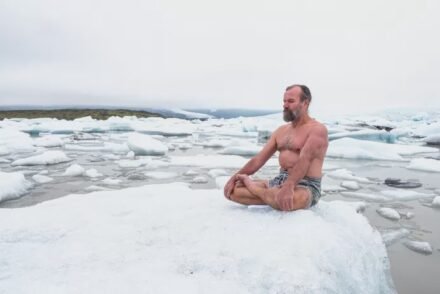
I’ve also brought in elements from my cold-exposure experiments (Wim Hof style). Daily cold showers are quite unpleasant for the first thirty seconds. Honestly, the next couple of minutes aren’t exactly pleasant either. But coming out the other side feeling awake and unbreakable makes almost every other discomfort in front of our day feel easy.
Tiny steps: the real kickoff
With morning runs, the hardest part is getting ready and stepping out the door. Rising a tad earlier for a solid warm-up. Show up at the gym, and magic happens. Starting to do the work is usually the hardest part.
That post-challenge glow? Unbeatable, right? Cold showers nail this: first 30 seconds suck, next couple minutes test you, but emerging energized? Priceless. Few daily tasks match that discomfort level, so everything else feels efortless.
Healthy habits stacking
- Consistent movement amps energy, lifts mood, cuts stress.
- Balanced nutrition fuel the fire for activity and recovery.
- Solid sleep resets hormones, curbs cravings, clears the mind.
- Stress mastery dials down junk food urges, boosts workout drive.
Nail one, and others tag along. Start exercising regularly? You’ll probably find yourself paying more attention to nutrition and rest without even trying.
It’s the same interconnected system I keep coming back to when I write about building a genuinely healthy lifestyle.
When it derails: no punishments, just positive pivots
Off days happen to everyone. The key is not to punish yourself or try to “make up” for it with heroics the next day. Just return to the track with something small and positive. That breaks the guilt spiral and protects long-term consistency.
Clear’s advice here is gold: focus on the system, not on the occasional miss. Reset move – quick win like a short walk or a few rounds of deep conscious breathing.
Dodging traps and tuning out distractions, especially endless social media scrolling.
From my “Changes and life” reflections, persistence through ups and downs builds that unbreakable core.
Discipline’s gift: true freedom
In the end, this whole point in my opinion is freedom. Pressfield and Huberman both land on the same truth. When you learn to move through resistance with disciplined habits, you earn real freedom in your life.
Clear reminds us that the smallest changes, repeated, compound into massive results. For me, in the world of movement and training, that freedom feels like effortless flow. Body and mind working in harmony, energy moving without force.
It’s the same chase I describe when I talk about finding your True North, moving with purpose, or hitting flow states in training.
Habits aren’t the goal. They’re the vehicle that finally lets you live the way you actually want to live. Keep experimenting, keep showing up, one small playful step at a time.
If any of this resonates, dig into the rest of my ideas here: https://robertpokovec.com/category/ideas/
See you out there in the field, grinding and moving closer to our true selves.